
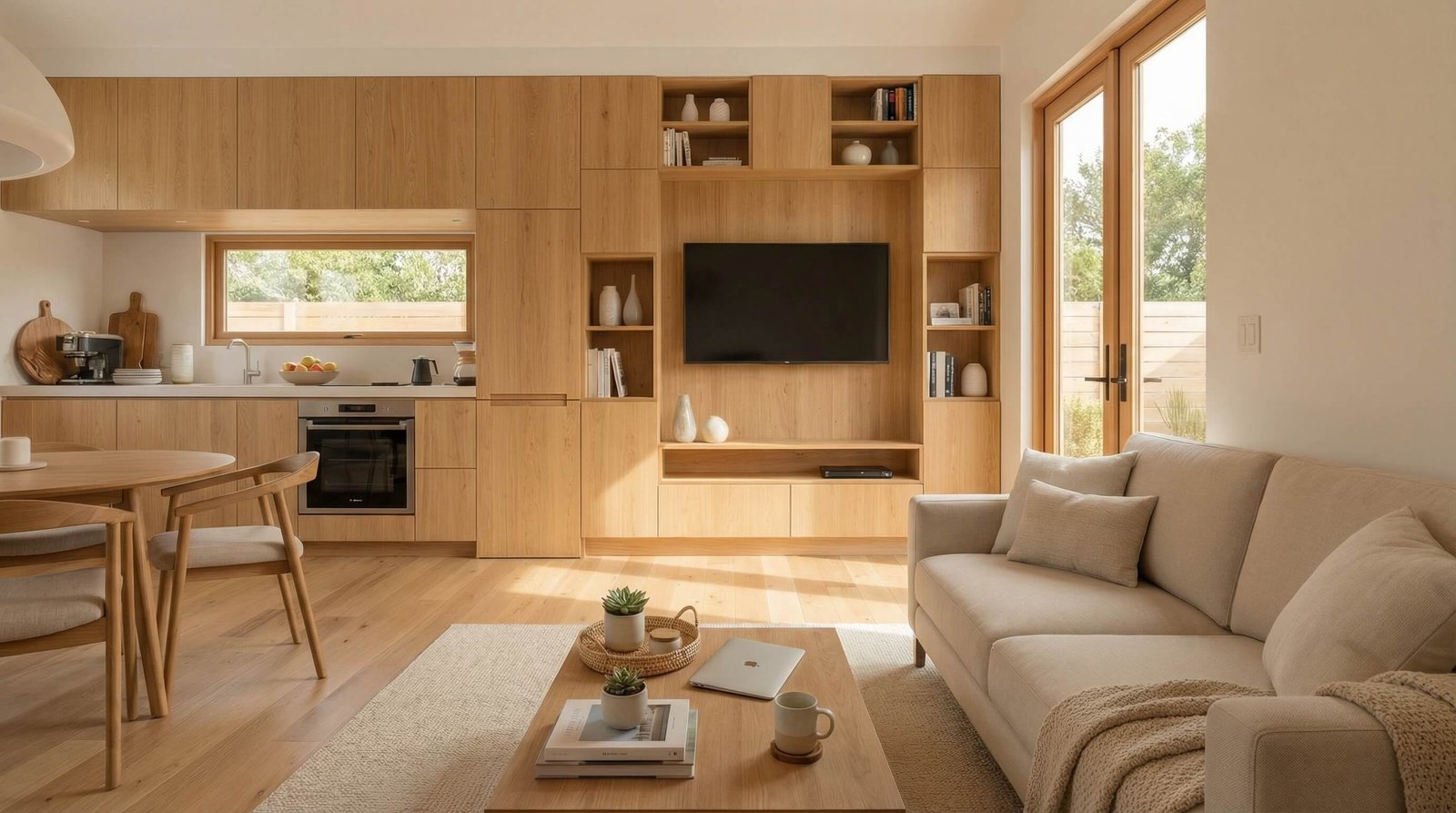
Getting Started
1. What is an ADU?
An Accessory Dwelling Unit (ADU) is a secondary residential unit on a single-family property. Also known as granny flats, in-law suites, or backyard homes, ADUs are complete living spaces with their own kitchen, bathroom, sleeping area, and entrance. They can be detached (standalone), attached to the main home, or converted from existing space like a garage.
2. Can I build an ADU on my property in California?
Almost certainly yes. California law (AB 68, SB 9, AB 1033) requires all cities and counties to allow ADUs on single-family residential lots. The specific requirements vary by jurisdiction, but the state has eliminated many traditional barriers including minimum lot sizes, owner-occupancy requirements, and parking mandates.
3. What's the difference between a prefab ADU and a site-built ADU?
A prefab (prefabricated) ADU is manufactured in a factory and delivered to your property largely complete. A site-built ADU is constructed from scratch on your property. Prefab ADUs offer faster timelines (3-5 months vs 12-18 months), more consistent quality, and often lower costs. Site-built ADUs offer more customization options but at higher costs and longer timelines.
Costs & Financing
4. How much does an ADU cost in California?
Costs vary widely by type. Prefab ADUs: $135,000-$250,000. Site-built ADUs: $200,000-$400,000+. Garage conversions: $80,000-$200,000. These ranges include permits, site prep, and installation but can vary significantly by location and finish level.
5. What financing options are available for ADUs?
Common financing options include HELOCs, home equity loans, cash-out refinancing, construction loans, CalHFA's ADU grant program (up to $40,000), and manufacturer payment plans. Many homeowners combine multiple sources.
6. How much rental income can I earn from an ADU?
ADU rental income in California ranges from $1,200-$3,500/month depending on location, size, and finishes. A studio ADU in a suburban area might rent for $1,500/month, while a 2-bedroom unit in a premium urban location can command $3,000+/month.
Permits & Regulations
7. Do I need a permit to build an ADU?
Yes. All ADUs require building permits. California law mandates that local jurisdictions process ADU permits within 60 days of a complete application. Permit costs typically range from $5,000-$15,000.
8. What are the size limits for ADUs in California?
Detached ADUs can be up to 1,200 square feet. Attached ADUs can be up to 50% of the primary home's living area (with a minimum of 800 sq ft). Junior ADUs (JADUs) are limited to 500 sq ft and must be within the existing home footprint.
9. What are the setback requirements?
California law limits setback requirements to 4 feet from side and rear property lines for detached ADUs. Front setback requirements vary by jurisdiction. Converted structures (like garages) may have no additional setback requirements.
10. Do I need to live on the property to build an ADU?
No. California eliminated owner-occupancy requirements for ADUs permitted between 2020 and 2025, and most jurisdictions have continued this policy. Check your local rules for the latest requirements.
Design & Construction
11. How long does it take to build an ADU?
Prefab ADUs: 3-5 months total (including permitting, manufacturing, and installation). Site-built ADUs: 12-18 months. Garage conversions: 3-6 months.
12. What materials are used in prefab ADUs?
EVO ADU uses steel-frame construction for superior durability, fire resistance, and precision. Other manufacturers may use wood framing or light-gauge steel. Interiors typically include modern finishes: engineered flooring, quartz countertops, and Energy Star appliances.
13. Can I customize my ADU?
Prefab ADUs offer configuration options within their model range — you can typically choose finishes, colors, and layouts. Site-built ADUs offer unlimited customization but at significantly higher costs and timelines.
14. Do ADUs need separate utilities?
ADUs can share utilities with the main home or have separate connections. California prohibits utility providers from requiring separate connections for ADUs under 750 sq ft. Larger ADUs may need separate meters depending on local requirements.
Property & Value
15. How much value does an ADU add to my property?
Studies show ADUs add 20-35% to property values in California. A well-built ADU can add $150,000-$300,000+ to your home's appraised value, often exceeding the cost of construction.
16. Can I sell my ADU separately from my main home?
Under AB 1033 (effective 2024), California allows cities to permit ADU condo conversions, enabling separate sale of ADUs. However, adoption varies by city. Check with your local planning department.
17. Will an ADU affect my property taxes?
Yes, adding an ADU will increase your property tax assessment. However, only the NEW construction value is reassessed — your existing home's Prop 13 base remains unchanged. Typical increase: $1,500-$3,000/year.
Living & Renting
18. Can I use my ADU as a short-term rental (Airbnb)?
It depends on your city's short-term rental regulations. Many California cities restrict or prohibit short-term rentals in ADUs. Los Angeles, for example, requires the property owner to live on-site for short-term rentals. Check your local ordinances.
19. Can a family member live in my ADU?
Absolutely. ADUs are commonly used for multigenerational living — housing aging parents, adult children, or other family members. There are no restrictions on who can live in your ADU.
20. Can I use my ADU as a home office?
Yes. While ADUs are classified as residential units, many homeowners use them as dedicated home offices, studios, or flex spaces. The ADU must meet residential building codes regardless of its use.
EVO ADU Specific
21. What models does EVO ADU offer?
EVO offers five models: Compact (350 sq ft), Studio (450 sq ft), One (550 sq ft, 1-bed), Two (700 sq ft, 2-bed), and Two+ (800 sq ft, 2-bed). Prices start at $145,800.
22. Where does EVO ADU deliver?
EVO ADU serves all of California, with local teams in Los Angeles, San Diego, Orange County, the Bay Area, Inland Empire, and Santa Barbara.
23. Does EVO handle permitting?
Yes. EVO ADU manages the entire permitting process, from site assessment through plan submission and approval. This is included in the service at no additional cost.
24. What's included in an EVO ADU?
Every EVO unit comes fully equipped: kitchen with appliances, full bathroom, HVAC system, lighting, flooring, and all finishes. The unit arrives ready to live in — just connect utilities.
25. How do I get started with EVO ADU?
Start with a free site eligibility check at evoadu.com/site-eligibility. If your property qualifies, you can configure your preferred model and explore financing options — all online.