
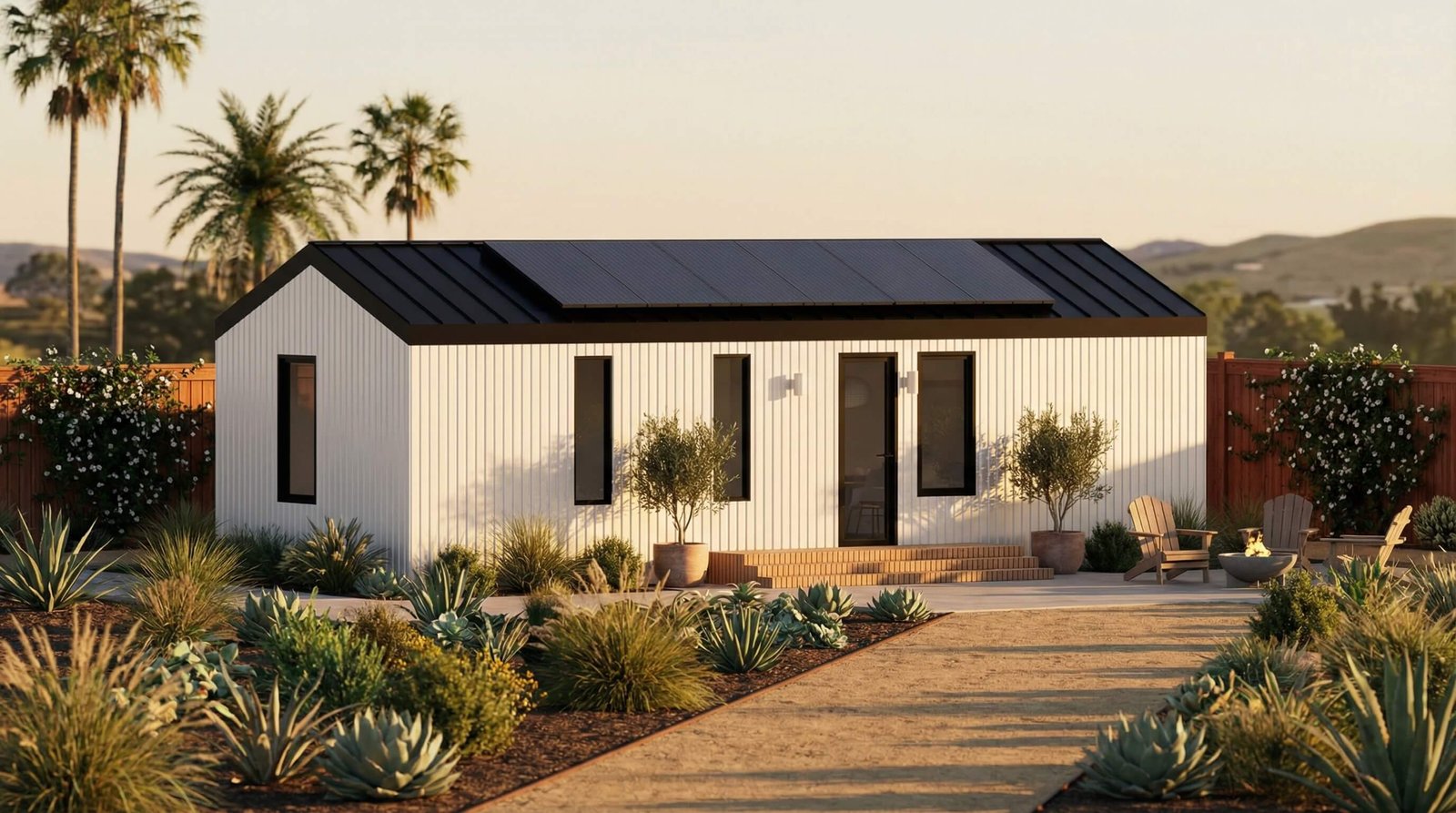
California Leads the Way on ADU Legislation
California has passed some of the most ADU-friendly legislation in the country. Starting with landmark bills in 2017 and continuing through recent updates, the state has systematically removed barriers that once made building an ADU difficult or impossible.
Here's what homeowners need to know in 2026.
Note: This is a general guide. ADU regulations can vary by city and county. Always verify requirements with your local planning department or a qualified professional.
Key Laws That Changed Everything
AB 68 (2020) — Reduced ADU approval timelines to 60 days. If a city doesn't act within 60 days, your ADU is considered approved.
SB 13 (2020) — Eliminated owner-occupancy requirements for ADUs (until 2025, later extended). Reduced impact fees for ADUs under 750 sq ft.
AB 881 (2020) — Limited cities' ability to impose parking requirements for ADUs. If your property is within half a mile of public transit, no additional parking is required.
SB 9 (2022) — Allows lot splits and duplexes on single-family lots, which can be combined with ADU provisions for increased density.
Recent updates — The state continues to refine ADU policy. Check with your local jurisdiction for the most current requirements.
Size Limits
California state law establishes these ADU size parameters:
Detached ADUs — Up to 1,200 square feet, regardless of lot size. Cities cannot impose smaller maximum sizes than what state law allows for standard ADUs.
Attached ADUs — Up to 1,200 square feet or 50% of the existing primary dwelling's floor area, whichever is less.
Junior ADUs (JADUs) — Up to 500 square feet, must be within the existing primary dwelling footprint.
Most EVO ADU models range from 350 to 800 square feet, well within state limits.
Setback Requirements
Setbacks determine how far your ADU must be from property lines:
Rear and side setbacks — 4 feet minimum for detached ADUs. This is a state standard that cities cannot increase for most ADUs.
Front setback — Must comply with your local zoning's front setback requirements.
Conversions — If you're converting an existing structure (like a garage), no setback beyond the existing structure is required.
Setbacks are one of the key factors in determining where on your lot an ADU can be placed — and which models will fit.
Parking
One of the biggest barriers to ADUs historically was parking requirements. California has largely eliminated this obstacle:
No parking required if:
- The ADU is within half a mile of public transit
- The ADU is within an architecturally and historically significant district
- The ADU is part of an existing primary residence or accessory structure
- On-street parking permits are required but not offered to the ADU occupant
- There's a car-share vehicle within one block
When parking is required — Maximum one space per ADU, which can be provided as tandem or in setback areas.
Owner Occupancy
California law has gone back and forth on this. The general trend is toward fewer restrictions:
Current status — Owner-occupancy requirements vary. Some jurisdictions require the property owner to live in either the primary dwelling or the ADU. Others have no owner-occupancy requirement.
Check your local jurisdiction's current rules, as this is an area of ongoing legislative activity.
Impact Fees
ADUs under 750 sq ft — Exempt from impact fees under state law. This can save thousands of dollars.
ADUs 750 sq ft and larger — May be subject to impact fees, but these must be proportional to the ADU's size relative to the primary dwelling.
The Permitting Process
Here's what the ADU permitting process typically looks like:
1. Preliminary research — Verify your property's zoning, lot size, setbacks, and utility availability. Many cities offer free preliminary consultations.
2. Plan submission — Submit your ADU plans to the local building department. Pre-engineered plans from established manufacturers can simplify this step.
3. Plan review — The city has 60 days to approve or provide comments. If they don't act within 60 days, your ADU is considered approved.
4. Building permits — Once plans are approved, you receive building permits to begin construction.
5. Inspections — Standard building inspections during and after construction.
6. Certificate of occupancy — Final sign-off that the ADU meets all codes and is ready for occupancy.
Common Misconceptions
"My HOA can block my ADU" — California law limits HOA authority over ADUs. HOAs cannot unreasonably restrict ADUs that comply with state and local law. However, some HOA rules may still apply.
"I need a huge lot" — Many ADUs can be built on standard California lots. Minimum lot size requirements have been reduced or eliminated for most ADU types.
"ADUs hurt property values" — Research consistently shows that ADUs increase property values. A completed ADU adds usable square footage and income potential to your property.
"The permit process takes forever" — With pre-engineered plans and California's 60-day review timeline, permitting can be faster than many homeowners expect.
How EVO ADU Simplifies Compliance
EVO ADUs are designed specifically for California's regulatory environment:
- Pre-engineered to meet California building codes
- Models sized within state and local limits
- 4-foot setback compatibility built into the design
- We handle all permit submissions and coordinate with your local building department
Building codes and regulations change. This guide provides general information current as of early 2026. Always confirm specific requirements with your local planning department before making decisions.