
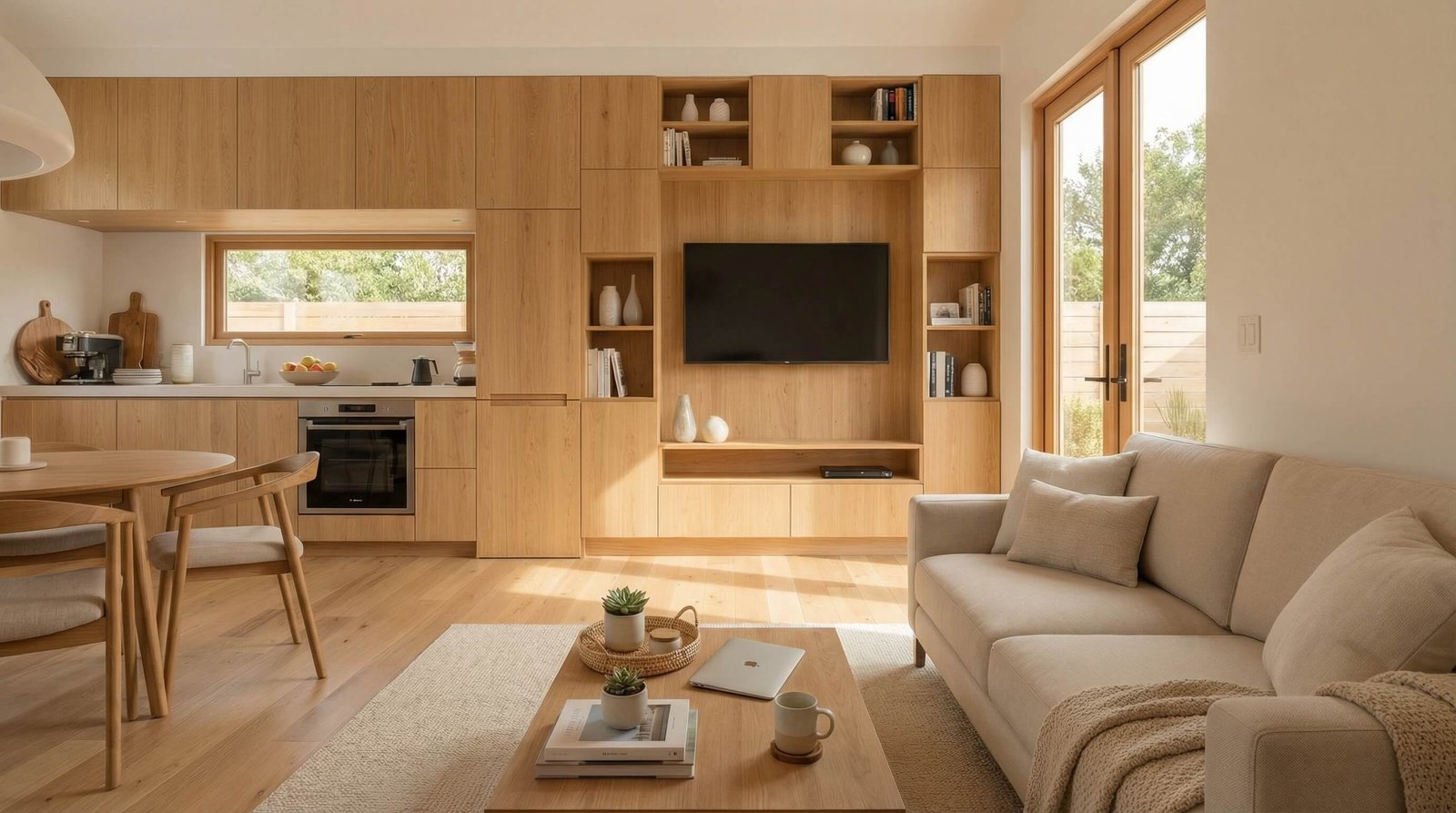
The Greenest Way to Add Housing
ADUs are inherently more sustainable than traditional new construction. They use existing land and infrastructure, require fewer materials per living unit, and reduce urban sprawl by adding housing density where it's needed most. But not all ADUs are equally green. Here's how prefab ADUs lead the way in sustainable housing.
All-Electric: California's Mandate, Our Standard
California's building code requires new construction, including ADUs, to be all-electric. This eliminates fossil fuel combustion on-site and enables your ADU to run entirely on clean electricity — especially if paired with rooftop solar. EVO ADUs come standard with heat pump water heaters, mini-split heat pump HVAC, induction cooktops, and Energy Star appliances. Zero gas lines means lower utility bills and zero on-site emissions.
Steel Frame: Sustainable by Design
EVO's steel-frame construction offers sustainability advantages that wood framing cannot match. Steel is 100% recyclable without loss of quality, requires no old-growth timber or chemically treated lumber, is pest-resistant (no termite treatments needed), produces less construction waste than stick-built framing, and has a longer structural lifespan (50+ years vs 25-30 for wood).
Factory Efficiency = Less Waste
Factory-built prefab ADUs generate up to 50% less construction waste compared to site-built units. Controlled manufacturing environments allow precise material cutting, recycling of scrap materials, reduced packaging waste, and elimination of weather-related material damage. This efficiency translates directly to both environmental benefit and cost savings.
Energy Performance
Modern prefab ADUs exceed California's Title 24 energy standards. Key features include a high-performance insulated building envelope, double-pane Low-E windows, LED lighting throughout, Energy Star rated appliances, and tight building envelope with minimal air leakage. The result: monthly utility costs of $80-$150 for a fully equipped ADU — a fraction of what a typical California apartment costs to operate.
Solar-Ready Design
EVO ADUs are designed to integrate with solar panels, whether mounted on the ADU roof or your main home. A small solar array (2-4 kW) can offset most or all of an ADU's electricity consumption, making it a net-zero energy home. Some California homeowners qualify for solar incentives that make this upgrade nearly free.
Water Conservation
In drought-prone California, water efficiency matters. Modern ADU fixtures include low-flow faucets and showerheads (1.5 GPM or less), dual-flush toilets, WaterSense certified appliances, and drought-tolerant landscaping recommendations. An ADU typically uses 40-60% less water per occupant than an average California home.